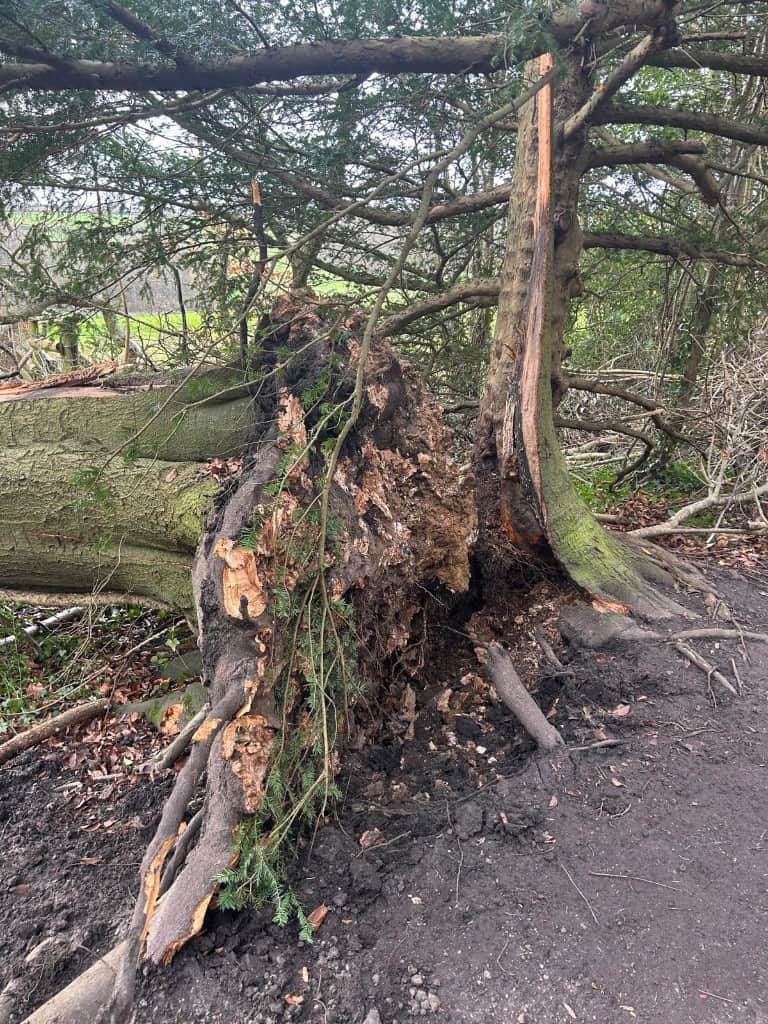
I use this metaphor sometimes in my strengths workshops, and it always seems to land - probably because most of us have seen what a bad storm can do to a tree.
Think about a tree in a really strong wind. If that tree is completely rigid - totally stiff - it snaps. But a tree that can bend, that flexes with the wind? That tree survives the storm. And when the wind stops, it straightens back up.
That is resilience. Not the absence of hard times. Not some superhuman ability to power through without flinching. It is the flexibility to get through it and come back to yourself afterwards.
A lesson from the campsite
I want to share a quick story, because it brought this metaphor to life for me in a unexpected way.
I went camping with my family and it was unexpectedly windy. My first instinct was to pitch the tent as far from the trees as possible. That seemed sensible. But my husband had other ideas. He stood there, watching the trees. I remember thinking - what on earth are you doing?
He explained that he was watching to see which trees were flexing in the wind. Bending and moving with it. And he chose to pitch the tent near those ones. Because a tree that bends with the wind is safe. It is the rigid ones that snap and come crashing down.
And we lived to tell the story.
So what helps the tree bend?
This is the bit that matters.
A tree that can flex in a storm has strong roots. It has a trunk that has grown through previous storms - not in spite of them, but because of them. Every bit of wind it has weathered has helped it develop the strength to handle the next one.
Your strengths work the same way. They are your roots. They are what hold you steady when things get rough, even when everything above the surface feels like it is being battered.
The thing is, most of us do not spend much time thinking about our strengths. We are far more practised at noticing what we are not good at, what went wrong, where we fell short. We are culturally wired to focus on fixing weaknesses rather than building on what already works.
But here is what I have seen, both as a therapist and through my own storms - when people start to really identify and lean into their strengths, something shifts. They stop trying to be unbreakable and start being flexible instead. They find their roots.
Resilience is not what you think it is
There is a common misconception that resilient people just cope better. That they are tougher, or more stoic, or simply built differently. But resilience is not about gritting your teeth and getting on with it. That is rigidity - and we have already seen what happens to the rigid tree.
Real resilience involves self-awareness. It means knowing what drains you and what sustains you. It means recognising when you are heading into a storm and having strategies that actually work for you - not a one-size-fits-all checklist, but tools that are rooted in who you are.
It also means allowing yourself to bend. To have the hard days. To not be okay for a while. Because the tree does not stay upright by refusing to move. It stays upright by moving with the wind and then finding its way back.
Finding your roots
If you are reading this and thinking "I am not sure what my strengths even are" - you are not alone. That is one of the most common things I hear from clients, and it is one of the most rewarding things to explore together.
Sometimes our greatest strengths are so woven into who we are that we cannot see them. Sometimes they have been dismissed or overlooked. And sometimes - particularly for neurodivergent individuals - strengths have been masked by years of trying to fit a mould that was never designed for you.
Wherever you are starting from, those roots are there. Sometimes they just need a bit of help finding the light.
If this resonates with you, I offer one-to-one therapy and workshops for both individuals and organisations. Whether you are navigating burnout, a big life transition, or simply feeling like you have lost your way a little - I would love to help you find your roots again.
I am based in Surrey and work from clinics in Guildford and East Horsley, with online sessions also available.
Get in touch: victoria@dragonflypsychotherapy.co.uk | www.dragonflypsychotherapy.co.uk